

Why AEDs Matter
Cardiac Arrest Doesn’t Wait for an Ambulance
Sudden cardiac arrest can strike anyone, anywhere, at any time. It does not only happen in hospitals—it happens at homes, offices, schools, sports venues, factories, and public spaces. When it happens, survival depends on how fast help arrives.
Not professional help—but immediate action by people on the scene.
That is why access to an Automated External Defibrillator (AED) is critical.
Cardiac Arrest Is Not a Hospital Problem
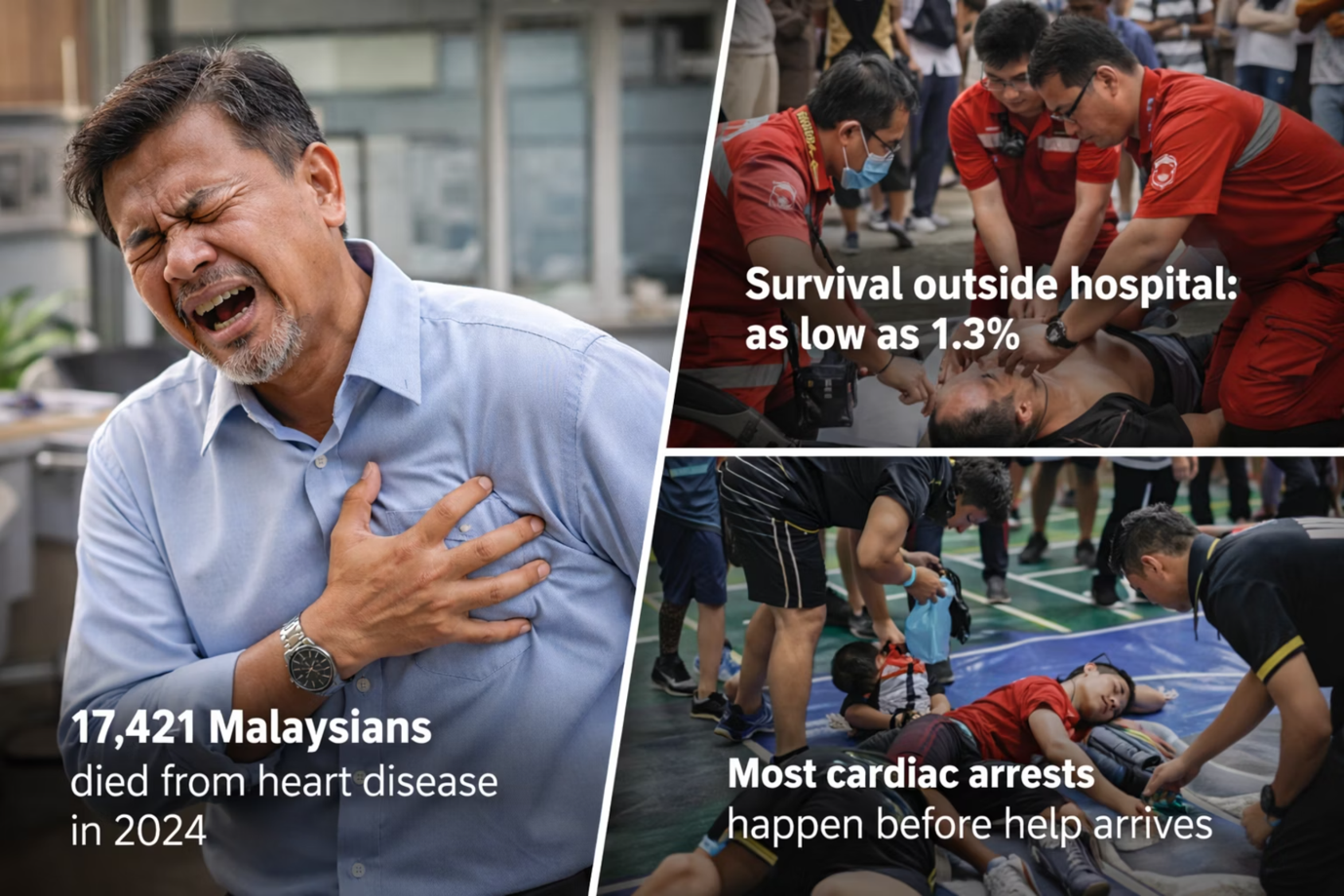
Many people assume that cardiac emergencies only occur in medical facilities. In reality, most cardiac arrests happen outside hospitals, often in places where no medical professionals are present.
- A parent at home.
- A colleague at work.
- A student at school.
- A customer in a mall.
- A friend during sports or recreation.
In these moments, the outcome depends on whether an AED is nearby and ready to be used.
The Golden 4 Minutes
Why Time Is the Difference Between Life and Death
When the heart stops, oxygen stops flowing to the brain. Within approximately 4 minutes without oxygen, permanent brain injury can begin.
As time passes, the chance of survival drops rapidly. CPR helps by maintaining minimal blood flow—but defibrillation is the key intervention for shockable heart rhythms.
The Chain of Survival

Call for Help
Activate emergency response immediately (call 999 and alert others)
Start CPR Immediately
Chest compressions help buy time by circulating oxygen

Turn On the AED
Follow clear voice prompts and on-screen instructions

Shock if Advised
The AED analyses the heart rhythm and delivers a shock only if needed
Every minute without defibrillation reduces survival chances significantly.
An AED on-site turns bystanders into first responders.
Malaysia’s Cardiac Arrest Reality
The Numbers We Cannot Ignore
Heart disease remains one of the leading causes of death in Malaysia.
- 17,421 deaths from ischaemic heart disease were recorded in a single year
- Survival rates for out-of-hospital cardiac arrest in some regions are as low as 1.3%
- Even at the higher end, survival rates rarely exceed 6–7% without early intervention
These are not just statistics. They represent families, colleagues, students, and communities.